FERATERRA
Precision | Progress | Perseverance
What is project feraterra?
A New World, engineered: our influence doesn’t end on Earth.


new species: demi humans
Human Ingenuity, Nature’s Mastery.
A miracle born for a better Future.
your own little world: domes
Turning the Unlivable into Home.
What is project feraterra?

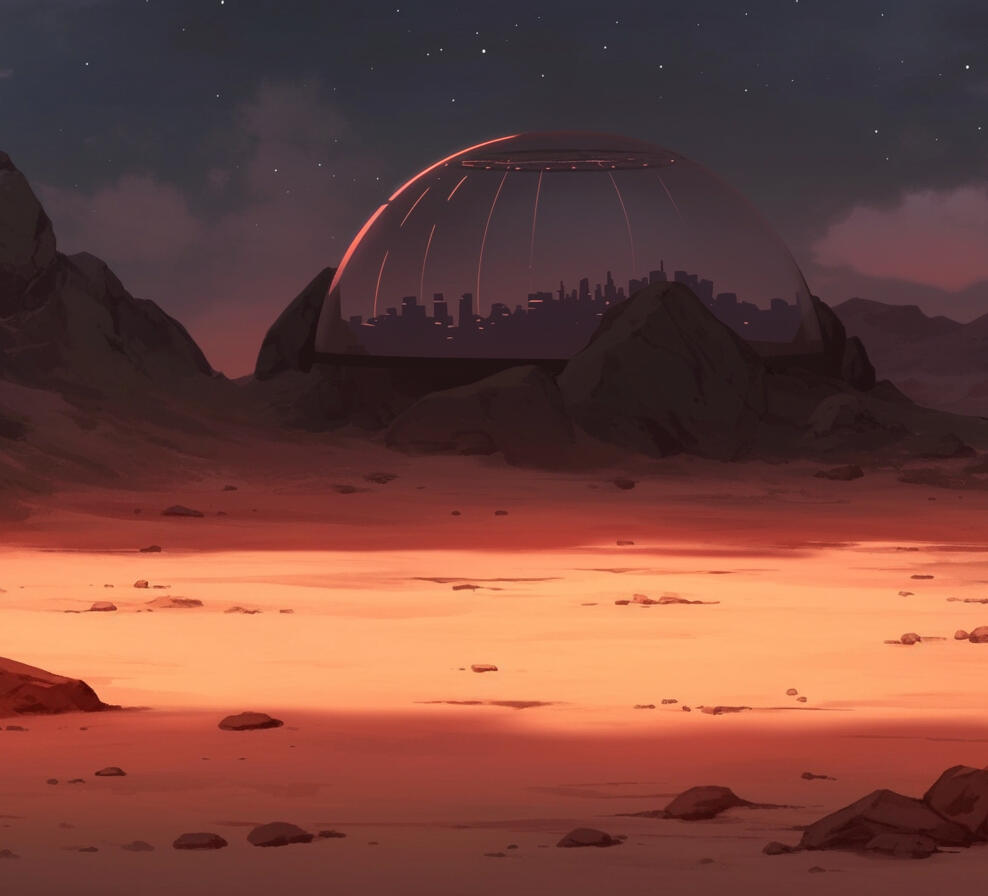
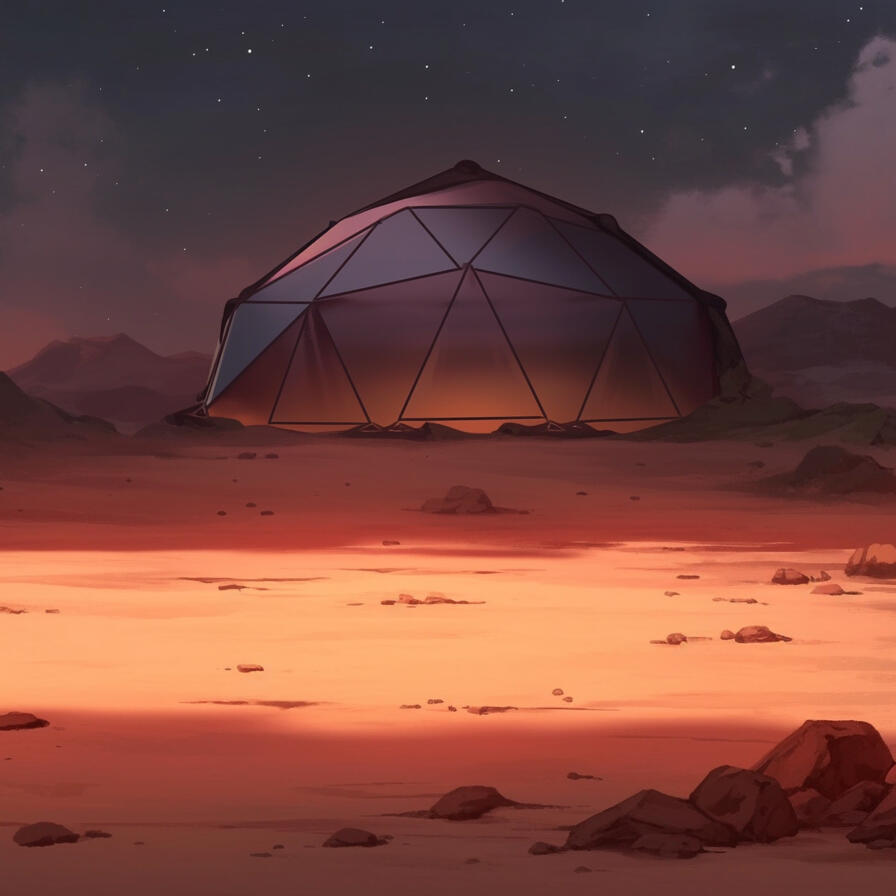
For centuries, humanity’s ambition extended beyond Earth, but true expansion required more than just survival—it demanded innovation. Project Feraterra, a classified initiative long in development before its official unveiling in 2000, set the foundation for Mars' transformation. Now, fifty years later, we celebrate its greatest achievement: a thriving, self-sustaining biosphere, perfectly attuned to the Red Planet.In the earliest years of Martian colonization, human settlements relied on sophisticated domed habitats to withstand the planet’s extreme environment. Initial efforts focused on resource extraction, research, and infrastructure, yet long-term habitation presented undeniable obstacles: low gravity compromised human physiology, unfiltered radiation posed genetic risks, and the absence of a natural ecosystem threatened self-sufficiency.Recognizing these challenges, Project Feraterra introduced a paradigm shift—engineered adaptation. Rather than struggling to impose Earth’s biology onto an incompatible world, scientists pursued a bolder path: the creation of life forms designed for Mars itself.Thus, the first generation of demi-humans was born—organisms seamlessly integrated with the planet’s conditions, bridging the gap between human civilization and a newly cultivated Martian ecosystem.Today, Mars is no longer an uninhabitable wasteland. It is a testament to human ingenuity, where life not only exists but flourishes—a world no longer waiting to be tamed, but one built to be lived in.
new species: demi humans

Pioneering Innovation: The Role of Human DNAThe breakthrough behind Project Feraterra lay not in artificial life, but in the evolution of our own genetic legacy. Rather than creating new organisms from the ground up, scientists identified a more efficient and ethical approach—leveraging voluntary human DNA contributions to serve as the foundation for a new species. By carefully integrating selected animal traits, researchers engineered the first generation of demi-humans, beings biologically optimized for Martian conditions. Each was designed for enhanced resilience, efficiency, and environmental stability, ensuring their success in a world where unaltered humans could not thrive.From Experiment to EcosystemInitially, demi-humans were introduced within controlled experimental zones, monitored as potential keystones in a self-sustaining Martian biosphere. As research progressed, the project expanded beyond isolated studies. New domes were constructed—not only for habitation but for the development of entire artificial biomes, including forests, rivers, and fully integrated food chains. Within these thriving ecosystems, demi-humans took on natural roles, fostering the balance necessary for long-term planetary stability. Over time, they formed structured societies, proving that life on Mars could be not only viable but prosperous.A Legacy of Growth and EvolutionThe first-generation (G1) demi-humans is directly linked to a human donor—an individual whose DNA provided the blueprint for their existence.Perspectives on this connection vary; some G1 demi-humans regard their donors as distant parental figures, while others see them simply as genetic templates. With the birth of second and third generations, wholly removed from this origin, the line between engineered creation and natural evolution is becoming increasingly seamless.Commitment to CareLike any pioneering innovation, early development presented challenges. Some first-generation demi-humans experience unique health considerations due to the complexity of their engineered biology.
Project Feraterra remains fully dedicated to their well-being, providing specialized medical advancements, tailored care, and a lifelong commitment to their comfort and stability.
As the project continues to refine its work, each new generation benefits from advancements that ensure an even greater standard of health, adaptability, and quality of life.Today, Mars is no longer just a dream—it is a reality, a home, and a world reborn.
your own little world: domes